Close this alert

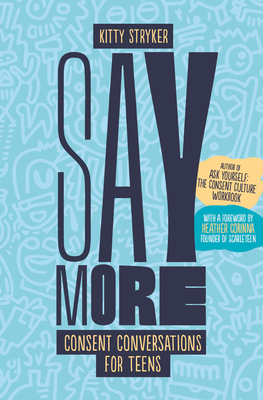
Say More: Consent Conversations for Teens
Current price:
$19.95
Publish Date:
Publisher:
Thornapple Press
ISBN:
9781990869518
Pages:
160
Age Range:
11 - 18
Language:
English
Not On Our Shelves. Arrival estimation 5-10 business days.
Description
Talking about consent can feel overwhelming, especially for young people who may be navigating their own boundaries for the first time. In Say More, consent culture activist Kitty Stryker guides teenagers in exploring what consent means to them. This timely and practical workbook allows the reader to work at their own pace and in their own way, with concrete examples from Kitty’s own youth, prompts inspired by questions teens have asked her and comprehensive resources to encourage further exploration and introspection.
Praise for Say More: Consent Conversations for Teens
"Say More will change the game for many young people and parents, whether dealing with extreme situations or the everyday challenges of interpersonal relationships and maintaining one’s agency."—Alex Winter, Actor
"Kitty is not only tackling the right topic but aiming at the exact right audience to make the most amount of positive impact."—Kevin A. Patterson, M.Ed, author of Love's Not Color Blind
"Say More is a brilliant overview of all things consent. It gives teens spot-on, realistic advice about how we might navigate all our relationships more consensually, and about how to handle things when we, inevitably, don’t manage it at times."—Dr. Meg-John Barker, co-author of How To Understand Your Sexuality and Sexuality: A Graphic Guide
"Say More is an accessible, practical, friendly guide to consent and healthy boundaries in all kinds of relationships." —Jennifer Peepas, creator of CaptainAwkward.com
"Say More turns the nuanced social cues of consent into concrete frameworks, providing clear scripts and step-by-step guidance for critical conversations that too often go unspoken." —Sarah Dopp, ADHD coach and neurodivergent writer
"Kitty Stryker dives into the complexities and nuances of consent while giving straightforward and concise information and advice on how to navigate it all." —Erica Scott, co-author of Creating Consent Culture: A Handbook for Educators and founder of Creating Consent Culture
"Through unpacking common consent slogans and rules, Stryker gives teens the space and permission to reflect on their understanding of consent and their own consent practices." —Sarah Casper, consent educator
"Although aimed at teens, I recommend Say More to everyone. Kitty Stryker has written a brilliant, illuminating torch of a book; the more people who read and use it, the brighter and clearer all our interactions can be." —Alix Fox, sexual culture writer and script consultant to Netflix's Sex Education
"This book is an accessible guide to navigating consent in multiple contexts! It's practical, insightful, and respects the individual as well as the cooperative nature of preferable human interaction." —Avens O'Brien, Feminists for Liberty
"An engaging, inclusive, and informative guide to this crucial topic." —Kirkus Reviews
An engaging, inclusive, and informative guide to this crucial topic.
Stryker offers a conversational and informative teens’ guide to discussing issues of consent.
From the outset of this guide, the author, a journalist and consent activist, is clear that it’s intended for teen readers: Preceding the main text is a “Note to Adults” that recommends strategies for getting the book into teens’ hands and beginning conversations about a subject that can be difficult to broach. Stryker is extremely clear throughout that consent is not just about sex. Early on, she defines the book as “part mentorship, part critical-thinking guide, part self-exploration, part challenge to the things we learn culturally as ‘just how it is.’” She acknowledges that there’s no “One True Answer” when it comes to consent—the book is intended as a jumping-off point for further thought and conversation. Within those parameters, Stryker tackles consent in all its various forms. The author presents each chapter as a question that she answers by using definitions, cultural context, clear examples, and suggestions for incorporating the ideas discussed into readers’ lives; the Q&A format makes the difficult topic more accessible for teens (or anyone). Some questions she considers include “Why is consent so often treated as a gendered thing?”; “Is consent sexy?”; and “What’s the difference between coercion and consent?” Stryker also delves into potential “what ifs” teens may think about, such as, what if “someone doesn’t respect your boundaries?” and “What should I do when I’ve crossed someone’s boundaries?” Keeping these heady questions accessible for her adolescent audience, Stryker answers them using ample personal examples and practical advice. This combination of lived experience and actionable counsel makes the material feel authentic and useful. For reasons laid out in the introductory chapters, the author draws more from personal experience and narrative examples than academic research, as she finds much of the literature on consent to be excessively gendered and narrow. Stryker is able to be more inclusive in her book, specifically discussing how these issues might differ for LGBTQ+ teens.
An engaging, inclusive, and informative guide to this crucial topic.
— Kirkus Reviews
An engaging, inclusive, and informative guide to this crucial topic.
Stryker offers a conversational and informative teens’ guide to discussing issues of consent.
From the outset of this guide, the author, a journalist and consent activist, is clear that it’s intended for teen readers: Preceding the main text is a “Note to Adults” that recommends strategies for getting the book into teens’ hands and beginning conversations about a subject that can be difficult to broach. Stryker is extremely clear throughout that consent is not just about sex. Early on, she defines the book as “part mentorship, part critical-thinking guide, part self-exploration, part challenge to the things we learn culturally as ‘just how it is.’” She acknowledges that there’s no “One True Answer” when it comes to consent—the book is intended as a jumping-off point for further thought and conversation. Within those parameters, Stryker tackles consent in all its various forms. The author presents each chapter as a question that she answers by using definitions, cultural context, clear examples, and suggestions for incorporating the ideas discussed into readers’ lives; the Q&A format makes the difficult topic more accessible for teens (or anyone). Some questions she considers include “Why is consent so often treated as a gendered thing?”; “Is consent sexy?”; and “What’s the difference between coercion and consent?” Stryker also delves into potential “what ifs” teens may think about, such as, what if “someone doesn’t respect your boundaries?” and “What should I do when I’ve crossed someone’s boundaries?” Keeping these heady questions accessible for her adolescent audience, Stryker answers them using ample personal examples and practical advice. This combination of lived experience and actionable counsel makes the material feel authentic and useful. For reasons laid out in the introductory chapters, the author draws more from personal experience and narrative examples than academic research, as she finds much of the literature on consent to be excessively gendered and narrow. Stryker is able to be more inclusive in her book, specifically discussing how these issues might differ for LGBTQ+ teens.
An engaging, inclusive, and informative guide to this crucial topic.
— Kirkus Reviews
An engaging, inclusive, and informative guide to this crucial topic.
Stryker offers a conversational and informative teens’ guide to discussing issues of consent.
From the outset of this guide, the author, a journalist and consent activist, is clear that it’s intended for teen readers: Preceding the main text is a “Note to Adults” that recommends strategies for getting the book into teens’ hands and beginning conversations about a subject that can be difficult to broach. Stryker is extremely clear throughout that consent is not just about sex. Early on, she defines the book as “part mentorship, part critical-thinking guide, part self-exploration, part challenge to the things we learn culturally as ‘just how it is.’” She acknowledges that there’s no “One True Answer” when it comes to consent—the book is intended as a jumping-off point for further thought and conversation. Within those parameters, Stryker tackles consent in all its various forms. The author presents each chapter as a question that she answers by using definitions, cultural context, clear examples, and suggestions for incorporating the ideas discussed into readers’ lives; the Q&A format makes the difficult topic more accessible for teens (or anyone). Some questions she considers include “Why is consent so often treated as a gendered thing?”; “Is consent sexy?”; and “What’s the difference between coercion and consent?” Stryker also delves into potential “what ifs” teens may think about, such as, what if “someone doesn’t respect your boundaries?” and “What should I do when I’ve crossed someone’s boundaries?” Keeping these heady questions accessible for her adolescent audience, Stryker answers them using ample personal examples and practical advice. This combination of lived experience and actionable counsel makes the material feel authentic and useful. For reasons laid out in the introductory chapters, the author draws more from personal experience and narrative examples than academic research, as she finds much of the literature on consent to be excessively gendered and narrow. Stryker is able to be more inclusive in her book, specifically discussing how these issues might differ for LGBTQ+ teens.
An engaging, inclusive, and informative guide to this crucial topic.
— Kirkus Reviews
An engaging, inclusive, and informative guide to this crucial topic.
Stryker offers a conversational and informative teens’ guide to discussing issues of consent.
From the outset of this guide, the author, a journalist and consent activist, is clear that it’s intended for teen readers: Preceding the main text is a “Note to Adults” that recommends strategies for getting the book into teens’ hands and beginning conversations about a subject that can be difficult to broach. Stryker is extremely clear throughout that consent is not just about sex. Early on, she defines the book as “part mentorship, part critical-thinking guide, part self-exploration, part challenge to the things we learn culturally as ‘just how it is.’” She acknowledges that there’s no “One True Answer” when it comes to consent—the book is intended as a jumping-off point for further thought and conversation. Within those parameters, Stryker tackles consent in all its various forms. The author presents each chapter as a question that she answers by using definitions, cultural context, clear examples, and suggestions for incorporating the ideas discussed into readers’ lives; the Q&A format makes the difficult topic more accessible for teens (or anyone). Some questions she considers include “Why is consent so often treated as a gendered thing?”; “Is consent sexy?”; and “What’s the difference between coercion and consent?” Stryker also delves into potential “what ifs” teens may think about, such as, what if “someone doesn’t respect your boundaries?” and “What should I do when I’ve crossed someone’s boundaries?” Keeping these heady questions accessible for her adolescent audience, Stryker answers them using ample personal examples and practical advice. This combination of lived experience and actionable counsel makes the material feel authentic and useful. For reasons laid out in the introductory chapters, the author draws more from personal experience and narrative examples than academic research, as she finds much of the literature on consent to be excessively gendered and narrow. Stryker is able to be more inclusive in her book, specifically discussing how these issues might differ for LGBTQ+ teens.
An engaging, inclusive, and informative guide to this crucial topic.
— Kirkus Reviews
An engaging, inclusive, and informative guide to this crucial topic.
Stryker offers a conversational and informative teens’ guide to discussing issues of consent.
From the outset of this guide, the author, a journalist and consent activist, is clear that it’s intended for teen readers: Preceding the main text is a “Note to Adults” that recommends strategies for getting the book into teens’ hands and beginning conversations about a subject that can be difficult to broach. Stryker is extremely clear throughout that consent is not just about sex. Early on, she defines the book as “part mentorship, part critical-thinking guide, part self-exploration, part challenge to the things we learn culturally as ‘just how it is.’” She acknowledges that there’s no “One True Answer” when it comes to consent—the book is intended as a jumping-off point for further thought and conversation. Within those parameters, Stryker tackles consent in all its various forms. The author presents each chapter as a question that she answers by using definitions, cultural context, clear examples, and suggestions for incorporating the ideas discussed into readers’ lives; the Q&A format makes the difficult topic more accessible for teens (or anyone). Some questions she considers include “Why is consent so often treated as a gendered thing?”; “Is consent sexy?”; and “What’s the difference between coercion and consent?” Stryker also delves into potential “what ifs” teens may think about, such as, what if “someone doesn’t respect your boundaries?” and “What should I do when I’ve crossed someone’s boundaries?” Keeping these heady questions accessible for her adolescent audience, Stryker answers them using ample personal examples and practical advice. This combination of lived experience and actionable counsel makes the material feel authentic and useful. For reasons laid out in the introductory chapters, the author draws more from personal experience and narrative examples than academic research, as she finds much of the literature on consent to be excessively gendered and narrow. Stryker is able to be more inclusive in her book, specifically discussing how these issues might differ for LGBTQ+ teens.
An engaging, inclusive, and informative guide to this crucial topic.
— Kirkus Reviews
An engaging, inclusive, and informative guide to this crucial topic.
Stryker offers a conversational and informative teens’ guide to discussing issues of consent.
From the outset of this guide, the author, a journalist and consent activist, is clear that it’s intended for teen readers: Preceding the main text is a “Note to Adults” that recommends strategies for getting the book into teens’ hands and beginning conversations about a subject that can be difficult to broach. Stryker is extremely clear throughout that consent is not just about sex. Early on, she defines the book as “part mentorship, part critical-thinking guide, part self-exploration, part challenge to the things we learn culturally as ‘just how it is.’” She acknowledges that there’s no “One True Answer” when it comes to consent—the book is intended as a jumping-off point for further thought and conversation. Within those parameters, Stryker tackles consent in all its various forms. The author presents each chapter as a question that she answers by using definitions, cultural context, clear examples, and suggestions for incorporating the ideas discussed into readers’ lives; the Q&A format makes the difficult topic more accessible for teens (or anyone). Some questions she considers include “Why is consent so often treated as a gendered thing?”; “Is consent sexy?”; and “What’s the difference between coercion and consent?” Stryker also delves into potential “what ifs” teens may think about, such as, what if “someone doesn’t respect your boundaries?” and “What should I do when I’ve crossed someone’s boundaries?” Keeping these heady questions accessible for her adolescent audience, Stryker answers them using ample personal examples and practical advice. This combination of lived experience and actionable counsel makes the material feel authentic and useful. For reasons laid out in the introductory chapters, the author draws more from personal experience and narrative examples than academic research, as she finds much of the literature on consent to be excessively gendered and narrow. Stryker is able to be more inclusive in her book, specifically discussing how these issues might differ for LGBTQ+ teens.
An engaging, inclusive, and informative guide to this crucial topic.
— Kirkus Reviews
An engaging, inclusive, and informative guide to this crucial topic.
Stryker offers a conversational and informative teens’ guide to discussing issues of consent.
From the outset of this guide, the author, a journalist and consent activist, is clear that it’s intended for teen readers: Preceding the main text is a “Note to Adults” that recommends strategies for getting the book into teens’ hands and beginning conversations about a subject that can be difficult to broach. Stryker is extremely clear throughout that consent is not just about sex. Early on, she defines the book as “part mentorship, part critical-thinking guide, part self-exploration, part challenge to the things we learn culturally as ‘just how it is.’” She acknowledges that there’s no “One True Answer” when it comes to consent—the book is intended as a jumping-off point for further thought and conversation. Within those parameters, Stryker tackles consent in all its various forms. The author presents each chapter as a question that she answers by using definitions, cultural context, clear examples, and suggestions for incorporating the ideas discussed into readers’ lives; the Q&A format makes the difficult topic more accessible for teens (or anyone). Some questions she considers include “Why is consent so often treated as a gendered thing?”; “Is consent sexy?”; and “What’s the difference between coercion and consent?” Stryker also delves into potential “what ifs” teens may think about, such as, what if “someone doesn’t respect your boundaries?” and “What should I do when I’ve crossed someone’s boundaries?” Keeping these heady questions accessible for her adolescent audience, Stryker answers them using ample personal examples and practical advice. This combination of lived experience and actionable counsel makes the material feel authentic and useful. For reasons laid out in the introductory chapters, the author draws more from personal experience and narrative examples than academic research, as she finds much of the literature on consent to be excessively gendered and narrow. Stryker is able to be more inclusive in her book, specifically discussing how these issues might differ for LGBTQ+ teens.
An engaging, inclusive, and informative guide to this crucial topic.
— Kirkus Reviews
An engaging, inclusive, and informative guide to this crucial topic.
Stryker offers a conversational and informative teens’ guide to discussing issues of consent.
From the outset of this guide, the author, a journalist and consent activist, is clear that it’s intended for teen readers: Preceding the main text is a “Note to Adults” that recommends strategies for getting the book into teens’ hands and beginning conversations about a subject that can be difficult to broach. Stryker is extremely clear throughout that consent is not just about sex. Early on, she defines the book as “part mentorship, part critical-thinking guide, part self-exploration, part challenge to the things we learn culturally as ‘just how it is.’” She acknowledges that there’s no “One True Answer” when it comes to consent—the book is intended as a jumping-off point for further thought and conversation. Within those parameters, Stryker tackles consent in all its various forms. The author presents each chapter as a question that she answers by using definitions, cultural context, clear examples, and suggestions for incorporating the ideas discussed into readers’ lives; the Q&A format makes the difficult topic more accessible for teens (or anyone). Some questions she considers include “Why is consent so often treated as a gendered thing?”; “Is consent sexy?”; and “What’s the difference between coercion and consent?” Stryker also delves into potential “what ifs” teens may think about, such as, what if “someone doesn’t respect your boundaries?” and “What should I do when I’ve crossed someone’s boundaries?” Keeping these heady questions accessible for her adolescent audience, Stryker answers them using ample personal examples and practical advice. This combination of lived experience and actionable counsel makes the material feel authentic and useful. For reasons laid out in the introductory chapters, the author draws more from personal experience and narrative examples than academic research, as she finds much of the literature on consent to be excessively gendered and narrow. Stryker is able to be more inclusive in her book, specifically discussing how these issues might differ for LGBTQ+ teens.
An engaging, inclusive, and informative guide to this crucial topic.
— Kirkus Reviews
An engaging, inclusive, and informative guide to this crucial topic.
Stryker offers a conversational and informative teens’ guide to discussing issues of consent.
From the outset of this guide, the author, a journalist and consent activist, is clear that it’s intended for teen readers: Preceding the main text is a “Note to Adults” that recommends strategies for getting the book into teens’ hands and beginning conversations about a subject that can be difficult to broach. Stryker is extremely clear throughout that consent is not just about sex. Early on, she defines the book as “part mentorship, part critical-thinking guide, part self-exploration, part challenge to the things we learn culturally as ‘just how it is.’” She acknowledges that there’s no “One True Answer” when it comes to consent—the book is intended as a jumping-off point for further thought and conversation. Within those parameters, Stryker tackles consent in all its various forms. The author presents each chapter as a question that she answers by using definitions, cultural context, clear examples, and suggestions for incorporating the ideas discussed into readers’ lives; the Q&A format makes the difficult topic more accessible for teens (or anyone). Some questions she considers include “Why is consent so often treated as a gendered thing?”; “Is consent sexy?”; and “What’s the difference between coercion and consent?” Stryker also delves into potential “what ifs” teens may think about, such as, what if “someone doesn’t respect your boundaries?” and “What should I do when I’ve crossed someone’s boundaries?” Keeping these heady questions accessible for her adolescent audience, Stryker answers them using ample personal examples and practical advice. This combination of lived experience and actionable counsel makes the material feel authentic and useful. For reasons laid out in the introductory chapters, the author draws more from personal experience and narrative examples than academic research, as she finds much of the literature on consent to be excessively gendered and narrow. Stryker is able to be more inclusive in her book, specifically discussing how these issues might differ for LGBTQ+ teens.
An engaging, inclusive, and informative guide to this crucial topic.
— Kirkus Reviews
An engaging, inclusive, and informative guide to this crucial topic.
Stryker offers a conversational and informative teens’ guide to discussing issues of consent.
From the outset of this guide, the author, a journalist and consent activist, is clear that it’s intended for teen readers: Preceding the main text is a “Note to Adults” that recommends strategies for getting the book into teens’ hands and beginning conversations about a subject that can be difficult to broach. Stryker is extremely clear throughout that consent is not just about sex. Early on, she defines the book as “part mentorship, part critical-thinking guide, part self-exploration, part challenge to the things we learn culturally as ‘just how it is.’” She acknowledges that there’s no “One True Answer” when it comes to consent—the book is intended as a jumping-off point for further thought and conversation. Within those parameters, Stryker tackles consent in all its various forms. The author presents each chapter as a question that she answers by using definitions, cultural context, clear examples, and suggestions for incorporating the ideas discussed into readers’ lives; the Q&A format makes the difficult topic more accessible for teens (or anyone). Some questions she considers include “Why is consent so often treated as a gendered thing?”; “Is consent sexy?”; and “What’s the difference between coercion and consent?” Stryker also delves into potential “what ifs” teens may think about, such as, what if “someone doesn’t respect your boundaries?” and “What should I do when I’ve crossed someone’s boundaries?” Keeping these heady questions accessible for her adolescent audience, Stryker answers them using ample personal examples and practical advice. This combination of lived experience and actionable counsel makes the material feel authentic and useful. For reasons laid out in the introductory chapters, the author draws more from personal experience and narrative examples than academic research, as she finds much of the literature on consent to be excessively gendered and narrow. Stryker is able to be more inclusive in her book, specifically discussing how these issues might differ for LGBTQ+ teens.
An engaging, inclusive, and informative guide to this crucial topic.
— Kirkus Reviews
An engaging, inclusive, and informative guide to this crucial topic.
Stryker offers a conversational and informative teens’ guide to discussing issues of consent.
From the outset of this guide, the author, a journalist and consent activist, is clear that it’s intended for teen readers: Preceding the main text is a “Note to Adults” that recommends strategies for getting the book into teens’ hands and beginning conversations about a subject that can be difficult to broach. Stryker is extremely clear throughout that consent is not just about sex. Early on, she defines the book as “part mentorship, part critical-thinking guide, part self-exploration, part challenge to the things we learn culturally as ‘just how it is.’” She acknowledges that there’s no “One True Answer” when it comes to consent—the book is intended as a jumping-off point for further thought and conversation. Within those parameters, Stryker tackles consent in all its various forms. The author presents each chapter as a question that she answers by using definitions, cultural context, clear examples, and suggestions for incorporating the ideas discussed into readers’ lives; the Q&A format makes the difficult topic more accessible for teens (or anyone). Some questions she considers include “Why is consent so often treated as a gendered thing?”; “Is consent sexy?”; and “What’s the difference between coercion and consent?” Stryker also delves into potential “what ifs” teens may think about, such as, what if “someone doesn’t respect your boundaries?” and “What should I do when I’ve crossed someone’s boundaries?” Keeping these heady questions accessible for her adolescent audience, Stryker answers them using ample personal examples and practical advice. This combination of lived experience and actionable counsel makes the material feel authentic and useful. For reasons laid out in the introductory chapters, the author draws more from personal experience and narrative examples than academic research, as she finds much of the literature on consent to be excessively gendered and narrow. Stryker is able to be more inclusive in her book, specifically discussing how these issues might differ for LGBTQ+ teens.
An engaging, inclusive, and informative guide to this crucial topic.
— Kirkus Reviews
An engaging, inclusive, and informative guide to this crucial topic.
Stryker offers a conversational and informative teens’ guide to discussing issues of consent.
From the outset of this guide, the author, a journalist and consent activist, is clear that it’s intended for teen readers: Preceding the main text is a “Note to Adults” that recommends strategies for getting the book into teens’ hands and beginning conversations about a subject that can be difficult to broach. Stryker is extremely clear throughout that consent is not just about sex. Early on, she defines the book as “part mentorship, part critical-thinking guide, part self-exploration, part challenge to the things we learn culturally as ‘just how it is.’” She acknowledges that there’s no “One True Answer” when it comes to consent—the book is intended as a jumping-off point for further thought and conversation. Within those parameters, Stryker tackles consent in all its various forms. The author presents each chapter as a question that she answers by using definitions, cultural context, clear examples, and suggestions for incorporating the ideas discussed into readers’ lives; the Q&A format makes the difficult topic more accessible for teens (or anyone). Some questions she considers include “Why is consent so often treated as a gendered thing?”; “Is consent sexy?”; and “What’s the difference between coercion and consent?” Stryker also delves into potential “what ifs” teens may think about, such as, what if “someone doesn’t respect your boundaries?” and “What should I do when I’ve crossed someone’s boundaries?” Keeping these heady questions accessible for her adolescent audience, Stryker answers them using ample personal examples and practical advice. This combination of lived experience and actionable counsel makes the material feel authentic and useful. For reasons laid out in the introductory chapters, the author draws more from personal experience and narrative examples than academic research, as she finds much of the literature on consent to be excessively gendered and narrow. Stryker is able to be more inclusive in her book, specifically discussing how these issues might differ for LGBTQ+ teens.
An engaging, inclusive, and informative guide to this crucial topic.
— Kirkus Reviews
An engaging, inclusive, and informative guide to this crucial topic.
Stryker offers a conversational and informative teens’ guide to discussing issues of consent.
From the outset of this guide, the author, a journalist and consent activist, is clear that it’s intended for teen readers: Preceding the main text is a “Note to Adults” that recommends strategies for getting the book into teens’ hands and beginning conversations about a subject that can be difficult to broach. Stryker is extremely clear throughout that consent is not just about sex. Early on, she defines the book as “part mentorship, part critical-thinking guide, part self-exploration, part challenge to the things we learn culturally as ‘just how it is.’” She acknowledges that there’s no “One True Answer” when it comes to consent—the book is intended as a jumping-off point for further thought and conversation. Within those parameters, Stryker tackles consent in all its various forms. The author presents each chapter as a question that she answers by using definitions, cultural context, clear examples, and suggestions for incorporating the ideas discussed into readers’ lives; the Q&A format makes the difficult topic more accessible for teens (or anyone). Some questions she considers include “Why is consent so often treated as a gendered thing?”; “Is consent sexy?”; and “What’s the difference between coercion and consent?” Stryker also delves into potential “what ifs” teens may think about, such as, what if “someone doesn’t respect your boundaries?” and “What should I do when I’ve crossed someone’s boundaries?” Keeping these heady questions accessible for her adolescent audience, Stryker answers them using ample personal examples and practical advice. This combination of lived experience and actionable counsel makes the material feel authentic and useful. For reasons laid out in the introductory chapters, the author draws more from personal experience and narrative examples than academic research, as she finds much of the literature on consent to be excessively gendered and narrow. Stryker is able to be more inclusive in her book, specifically discussing how these issues might differ for LGBTQ+ teens.
An engaging, inclusive, and informative guide to this crucial topic.
— Kirkus Reviews
An engaging, inclusive, and informative guide to this crucial topic.
Stryker offers a conversational and informative teens’ guide to discussing issues of consent.
From the outset of this guide, the author, a journalist and consent activist, is clear that it’s intended for teen readers: Preceding the main text is a “Note to Adults” that recommends strategies for getting the book into teens’ hands and beginning conversations about a subject that can be difficult to broach. Stryker is extremely clear throughout that consent is not just about sex. Early on, she defines the book as “part mentorship, part critical-thinking guide, part self-exploration, part challenge to the things we learn culturally as ‘just how it is.’” She acknowledges that there’s no “One True Answer” when it comes to consent—the book is intended as a jumping-off point for further thought and conversation. Within those parameters, Stryker tackles consent in all its various forms. The author presents each chapter as a question that she answers by using definitions, cultural context, clear examples, and suggestions for incorporating the ideas discussed into readers’ lives; the Q&A format makes the difficult topic more accessible for teens (or anyone). Some questions she considers include “Why is consent so often treated as a gendered thing?”; “Is consent sexy?”; and “What’s the difference between coercion and consent?” Stryker also delves into potential “what ifs” teens may think about, such as, what if “someone doesn’t respect your boundaries?” and “What should I do when I’ve crossed someone’s boundaries?” Keeping these heady questions accessible for her adolescent audience, Stryker answers them using ample personal examples and practical advice. This combination of lived experience and actionable counsel makes the material feel authentic and useful. For reasons laid out in the introductory chapters, the author draws more from personal experience and narrative examples than academic research, as she finds much of the literature on consent to be excessively gendered and narrow. Stryker is able to be more inclusive in her book, specifically discussing how these issues might differ for LGBTQ+ teens.
An engaging, inclusive, and informative guide to this crucial topic.
— Kirkus Reviews
An engaging, inclusive, and informative guide to this crucial topic. Stryker offers a conversational and informative teens’ guide to discussing issues of consent.
— Kirkus Reviews
An engaging, inclusive, and informative guide to this crucial topic. Stryker offers a conversational and informative teens’ guide to discussing issues of consent.
— Kirkus Reviews
Stryker goes beyond first-time and initial interactions, exploring such issues as "What's the Best Way to Tell Someone You've Changed Your Mind?" and "What Should I Do When I've Crossed Someone's Boundaries?" Features include a toolbox of strategies, checklists, consent tips, a bibliography, website guides, crisis resources, and a helpful glossary. This offers accessible and useful guidance for teens (and their parents), no matter how they identify.
— Kathleen McBroom
Stryker goes beyond first-time and initial interactions, exploring such issues as "What's the Best Way to Tell Someone You've Changed Your Mind?" and "What Should I Do When I've Crossed Someone's Boundaries?" Features include a toolbox of strategies, checklists, consent tips, a bibliography, website guides, crisis resources, and a helpful glossary. This offers accessible and useful guidance for teens (and their parents), no matter how they identify.
— Kathleen McBroom
Stryker goes beyond first-time and initial interactions, exploring such issues as "What's the Best Way to Tell Someone You've Changed Your Mind?" and "What Should I Do When I've Crossed Someone's Boundaries?" Features include a toolbox of strategies, checklists, consent tips, a bibliography, website guides, crisis resources, and a helpful glossary. This offers accessible and useful guidance for teens (and their parents), no matter how they identify.
— Kathleen McBroom
Stryker goes beyond first-time and initial interactions, exploring such issues as "What's the Best Way to Tell Someone You've Changed Your Mind?" and "What Should I Do When I've Crossed Someone's Boundaries?" Features include a toolbox of strategies, checklists, consent tips, a bibliography, website guides, crisis resources, and a helpful glossary. This offers accessible and useful guidance for teens (and their parents), no matter how they identify.
— Kathleen McBroom
Stryker goes beyond first-time and initial interactions, exploring such issues as "What's the Best Way to Tell Someone You've Changed Your Mind?" and "What Should I Do When I've Crossed Someone's Boundaries?" Features include a toolbox of strategies, checklists, consent tips, a bibliography, website guides, crisis resources, and a helpful glossary. This offers accessible and useful guidance for teens (and their parents), no matter how they identify.
— Kathleen McBroom
Stryker goes beyond first-time and initial interactions, exploring such issues as "What's the Best Way to Tell Someone You've Changed Your Mind?" and "What Should I Do When I've Crossed Someone's Boundaries?" Features include a toolbox of strategies, checklists, consent tips, a bibliography, website guides, crisis resources, and a helpful glossary. This offers accessible and useful guidance for teens (and their parents), no matter how they identify.
— Kathleen McBroom
Stryker goes beyond first-time and initial interactions, exploring such issues as "What's the Best Way to Tell Someone You've Changed Your Mind?" and "What Should I Do When I've Crossed Someone's Boundaries?" Features include a toolbox of strategies, checklists, consent tips, a bibliography, website guides, crisis resources, and a helpful glossary. This offers accessible and useful guidance for teens (and their parents), no matter how they identify.
— Kathleen McBroom
Stryker goes beyond first-time and initial interactions, exploring such issues as "What's the Best Way to Tell Someone You've Changed Your Mind?" and "What Should I Do When I've Crossed Someone's Boundaries?" Features include a toolbox of strategies, checklists, consent tips, a bibliography, website guides, crisis resources, and a helpful glossary. This offers accessible and useful guidance for teens (and their parents), no matter how they identify.
— Kathleen McBroom
Stryker goes beyond first-time and initial interactions, exploring such issues as "What's the Best Way to Tell Someone You've Changed Your Mind?" and "What Should I Do When I've Crossed Someone's Boundaries?" Features include a toolbox of strategies, checklists, consent tips, a bibliography, website guides, crisis resources, and a helpful glossary. This offers accessible and useful guidance for teens (and their parents), no matter how they identify.
— Kathleen McBroom
Stryker goes beyond first-time and initial interactions, exploring such issues as "What's the Best Way to Tell Someone You've Changed Your Mind?" and "What Should I Do When I've Crossed Someone's Boundaries?" Features include a toolbox of strategies, checklists, consent tips, a bibliography, website guides, crisis resources, and a helpful glossary. This offers accessible and useful guidance for teens (and their parents), no matter how they identify.
— Kathleen McBroom
Stryker goes beyond first-time and initial interactions, exploring such issues as "What's the Best Way to Tell Someone You've Changed Your Mind?" and "What Should I Do When I've Crossed Someone's Boundaries?" Features include a toolbox of strategies, checklists, consent tips, a bibliography, website guides, crisis resources, and a helpful glossary. This offers accessible and useful guidance for teens (and their parents), no matter how they identify.
— Kathleen McBroom
Stryker goes beyond first-time and initial interactions, exploring such issues as "What's the Best Way to Tell Someone You've Changed Your Mind?" and "What Should I Do When I've Crossed Someone's Boundaries?" Features include a toolbox of strategies, checklists, consent tips, a bibliography, website guides, crisis resources, and a helpful glossary. This offers accessible and useful guidance for teens (and their parents), no matter how they identify.
— Kathleen McBroom
Stryker goes beyond first-time and initial interactions, exploring such issues as "What's the Best Way to Tell Someone You've Changed Your Mind?" and "What Should I Do When I've Crossed Someone's Boundaries?" Features include a toolbox of strategies, checklists, consent tips, a bibliography, website guides, crisis resources, and a helpful glossary. This offers accessible and useful guidance for teens (and their parents), no matter how they identify.
— Kathleen McBroom
Stryker goes beyond first-time and initial interactions, exploring such issues as "What's the Best Way to Tell Someone You've Changed Your Mind?" and "What Should I Do When I've Crossed Someone's Boundaries?" Features include a toolbox of strategies, checklists, consent tips, a bibliography, website guides, crisis resources, and a helpful glossary. This offers accessible and useful guidance for teens (and their parents), no matter how they identify.
— Kathleen McBroom
Stryker goes beyond first-time and initial interactions, exploring such issues as "What's the Best Way to Tell Someone You've Changed Your Mind?" and "What Should I Do When I've Crossed Someone's Boundaries?" Features include a toolbox of strategies, checklists, consent tips, a bibliography, website guides, crisis resources, and a helpful glossary. This offers accessible and useful guidance for teens (and their parents), no matter how they identify.
— Kathleen McBroom
Stryker goes beyond first-time and initial interactions, exploring such issues as "What's the Best Way to Tell Someone You've Changed Your Mind?" and "What Should I Do When I've Crossed Someone's Boundaries?" Features include a toolbox of strategies, checklists, consent tips, a bibliography, website guides, crisis resources, and a helpful glossary. This offers accessible and useful guidance for teens (and their parents), no matter how they identify.
— Kathleen McBroom
Kitty Stryker has followed up her powerful book on consent culture with an essential resource for young people. Say More is crystal clear and complex without being dense or academic and is brimming with compassion and identification. Boundaries and consent are rarely discussed with our teens and children and should be commonplace in homes and schools. If I had had this book when I was thirteen and struggling alone with an abuser, it would have been a game changer. Say More will change the game for many young people and parents, whether dealing with extreme situations or the everyday challenges of interpersonal relationships and maintaining one’s agency.
— Alex Winter
Kitty Stryker has followed up her powerful book on consent culture with an essential resource for young people. Say More is crystal clear and complex without being dense or academic and is brimming with compassion and identification. Boundaries and consent are rarely discussed with our teens and children and should be commonplace in homes and schools. If I had had this book when I was thirteen and struggling alone with an abuser, it would have been a game changer. Say More will change the game for many young people and parents, whether dealing with extreme situations or the everyday challenges of interpersonal relationships and maintaining one’s agency.
— Alex Winter
Kitty Stryker has followed up her powerful book on consent culture with an essential resource for young people. Say More is crystal clear and complex without being dense or academic and is brimming with compassion and identification. Boundaries and consent are rarely discussed with our teens and children and should be commonplace in homes and schools. If I had had this book when I was thirteen and struggling alone with an abuser, it would have been a game changer. Say More will change the game for many young people and parents, whether dealing with extreme situations or the everyday challenges of interpersonal relationships and maintaining one’s agency.
— Alex Winter
Kitty Stryker has followed up her powerful book on consent culture with an essential resource for young people. Say More is crystal clear and complex without being dense or academic and is brimming with compassion and identification. Boundaries and consent are rarely discussed with our teens and children and should be commonplace in homes and schools. If I had had this book when I was thirteen and struggling alone with an abuser, it would have been a game changer. Say More will change the game for many young people and parents, whether dealing with extreme situations or the everyday challenges of interpersonal relationships and maintaining one’s agency.
— Alex Winter
Kitty Stryker has followed up her powerful book on consent culture with an essential resource for young people. Say More is crystal clear and complex without being dense or academic and is brimming with compassion and identification. Boundaries and consent are rarely discussed with our teens and children and should be commonplace in homes and schools. If I had had this book when I was thirteen and struggling alone with an abuser, it would have been a game changer. Say More will change the game for many young people and parents, whether dealing with extreme situations or the everyday challenges of interpersonal relationships and maintaining one’s agency.
— Alex Winter
Kitty Stryker has followed up her powerful book on consent culture with an essential resource for young people. Say More is crystal clear and complex without being dense or academic and is brimming with compassion and identification. Boundaries and consent are rarely discussed with our teens and children and should be commonplace in homes and schools. If I had had this book when I was thirteen and struggling alone with an abuser, it would have been a game changer. Say More will change the game for many young people and parents, whether dealing with extreme situations or the everyday challenges of interpersonal relationships and maintaining one’s agency.
— Alex Winter
Kitty Stryker has followed up her powerful book on consent culture with an essential resource for young people. Say More is crystal clear and complex without being dense or academic and is brimming with compassion and identification. Boundaries and consent are rarely discussed with our teens and children and should be commonplace in homes and schools. If I had had this book when I was thirteen and struggling alone with an abuser, it would have been a game changer. Say More will change the game for many young people and parents, whether dealing with extreme situations or the everyday challenges of interpersonal relationships and maintaining one’s agency.
— Alex Winter
Kitty Stryker has followed up her powerful book on consent culture with an essential resource for young people. Say More is crystal clear and complex without being dense or academic and is brimming with compassion and identification. Boundaries and consent are rarely discussed with our teens and children and should be commonplace in homes and schools. If I had had this book when I was thirteen and struggling alone with an abuser, it would have been a game changer. Say More will change the game for many young people and parents, whether dealing with extreme situations or the everyday challenges of interpersonal relationships and maintaining one’s agency.
— Alex Winter
Kitty Stryker has followed up her powerful book on consent culture with an essential resource for young people. Say More is crystal clear and complex without being dense or academic and is brimming with compassion and identification. Boundaries and consent are rarely discussed with our teens and children and should be commonplace in homes and schools. If I had had this book when I was thirteen and struggling alone with an abuser, it would have been a game changer. Say More will change the game for many young people and parents, whether dealing with extreme situations or the everyday challenges of interpersonal relationships and maintaining one’s agency.
— Alex Winter
Kitty Stryker has followed up her powerful book on consent culture with an essential resource for young people. Say More is crystal clear and complex without being dense or academic and is brimming with compassion and identification. Boundaries and consent are rarely discussed with our teens and children and should be commonplace in homes and schools. If I had had this book when I was thirteen and struggling alone with an abuser, it would have been a game changer. Say More will change the game for many young people and parents, whether dealing with extreme situations or the everyday challenges of interpersonal relationships and maintaining one’s agency.
— Alex Winter
Kitty Stryker has followed up her powerful book on consent culture with an essential resource for young people. Say More is crystal clear and complex without being dense or academic and is brimming with compassion and identification. Boundaries and consent are rarely discussed with our teens and children and should be commonplace in homes and schools. If I had had this book when I was thirteen and struggling alone with an abuser, it would have been a game changer. Say More will change the game for many young people and parents, whether dealing with extreme situations or the everyday challenges of interpersonal relationships and maintaining one’s agency.
— Alex Winter
Kitty Stryker has followed up her powerful book on consent culture with an essential resource for young people. Say More is crystal clear and complex without being dense or academic and is brimming with compassion and identification. Boundaries and consent are rarely discussed with our teens and children and should be commonplace in homes and schools. If I had had this book when I was thirteen and struggling alone with an abuser, it would have been a game changer. Say More will change the game for many young people and parents, whether dealing with extreme situations or the everyday challenges of interpersonal relationships and maintaining one’s agency.
— Alex Winter
Kitty Stryker has followed up her powerful book on consent culture with an essential resource for young people. Say More is crystal clear and complex without being dense or academic and is brimming with compassion and identification. Boundaries and consent are rarely discussed with our teens and children and should be commonplace in homes and schools. If I had had this book when I was thirteen and struggling alone with an abuser, it would have been a game changer. Say More will change the game for many young people and parents, whether dealing with extreme situations or the everyday challenges of interpersonal relationships and maintaining one’s agency.
— Alex Winter
Kitty Stryker has followed up her powerful book on consent culture with an essential resource for young people. Say More is crystal clear and complex without being dense or academic and is brimming with compassion and identification. Boundaries and consent are rarely discussed with our teens and children and should be commonplace in homes and schools. If I had had this book when I was thirteen and struggling alone with an abuser, it would have been a game changer. Say More will change the game for many young people and parents, whether dealing with extreme situations or the everyday challenges of interpersonal relationships and maintaining one’s agency.
— Alex Winter
Kitty Stryker has followed up her powerful book on consent culture with an essential resource for young people. Say More is crystal clear and complex without being dense or academic and is brimming with compassion and identification. Boundaries and consent are rarely discussed with our teens and children and should be commonplace in homes and schools. If I had had this book when I was thirteen and struggling alone with an abuser, it would have been a game changer. Say More will change the game for many young people and parents, whether dealing with extreme situations or the everyday challenges of interpersonal relationships and maintaining one’s agency.
— Alex Winter
Kitty Stryker has followed up her powerful book on consent culture with an essential resource for young people. Say More is crystal clear and complex without being dense or academic and is brimming with compassion and identification. Boundaries and consent are rarely discussed with our teens and children and should be commonplace in homes and schools. If I had had this book when I was thirteen and struggling alone with an abuser, it would have been a game changer. Say More will change the game for many young people and parents, whether dealing with extreme situations or the everyday challenges of interpersonal relationships and maintaining one’s agency.
— Alex Winter
Say More is a brilliant overview of all things consent. It gives teens spot-on, realistic advice about how we might navigate all our relationships more consensually, and about how to handle things when we, inevitably, don’t manage it at times. Kitty Stryker is just the friendly mentor required to guide us through this complex territory with clarity, steadiness, and a whole lot of relatable experience.
— Dr. Meg-John Barker
Say More is a brilliant overview of all things consent. It gives teens spot-on, realistic advice about how we might navigate all our relationships more consensually, and about how to handle things when we, inevitably, don’t manage it at times. Kitty Stryker is just the friendly mentor required to guide us through this complex territory with clarity, steadiness, and a whole lot of relatable experience.
— Dr. Meg-John Barker
Say More is a brilliant overview of all things consent. It gives teens spot-on, realistic advice about how we might navigate all our relationships more consensually, and about how to handle things when we, inevitably, don’t manage it at times. Kitty Stryker is just the friendly mentor required to guide us through this complex territory with clarity, steadiness, and a whole lot of relatable experience.
— Dr. Meg-John Barker
Say More is a brilliant overview of all things consent. It gives teens spot-on, realistic advice about how we might navigate all our relationships more consensually, and about how to handle things when we, inevitably, don’t manage it at times. Kitty Stryker is just the friendly mentor required to guide us through this complex territory with clarity, steadiness, and a whole lot of relatable experience.
— Dr. Meg-John Barker
Say More is a brilliant overview of all things consent. It gives teens spot-on, realistic advice about how we might navigate all our relationships more consensually, and about how to handle things when we, inevitably, don’t manage it at times. Kitty Stryker is just the friendly mentor required to guide us through this complex territory with clarity, steadiness, and a whole lot of relatable experience.
— Dr. Meg-John Barker
Say More is a brilliant overview of all things consent. It gives teens spot-on, realistic advice about how we might navigate all our relationships more consensually, and about how to handle things when we, inevitably, don’t manage it at times. Kitty Stryker is just the friendly mentor required to guide us through this complex territory with clarity, steadiness, and a whole lot of relatable experience.
— Dr. Meg-John Barker
Say More is a brilliant overview of all things consent. It gives teens spot-on, realistic advice about how we might navigate all our relationships more consensually, and about how to handle things when we, inevitably, don’t manage it at times. Kitty Stryker is just the friendly mentor required to guide us through this complex territory with clarity, steadiness, and a whole lot of relatable experience.
— Dr. Meg-John Barker
Say More is a brilliant overview of all things consent. It gives teens spot-on, realistic advice about how we might navigate all our relationships more consensually, and about how to handle things when we, inevitably, don’t manage it at times. Kitty Stryker is just the friendly mentor required to guide us through this complex territory with clarity, steadiness, and a whole lot of relatable experience.
— Dr. Meg-John Barker
Say More is a brilliant overview of all things consent. It gives teens spot-on, realistic advice about how we might navigate all our relationships more consensually, and about how to handle things when we, inevitably, don’t manage it at times. Kitty Stryker is just the friendly mentor required to guide us through this complex territory with clarity, steadiness, and a whole lot of relatable experience.
— Dr. Meg-John Barker
Say More is a brilliant overview of all things consent. It gives teens spot-on, realistic advice about how we might navigate all our relationships more consensually, and about how to handle things when we, inevitably, don’t manage it at times. Kitty Stryker is just the friendly mentor required to guide us through this complex territory with clarity, steadiness, and a whole lot of relatable experience.
— Dr. Meg-John Barker
Say More is a brilliant overview of all things consent. It gives teens spot-on, realistic advice about how we might navigate all our relationships more consensually, and about how to handle things when we, inevitably, don’t manage it at times. Kitty Stryker is just the friendly mentor required to guide us through this complex territory with clarity, steadiness, and a whole lot of relatable experience.
— Dr. Meg-John Barker
Say More is a brilliant overview of all things consent. It gives teens spot-on, realistic advice about how we might navigate all our relationships more consensually, and about how to handle things when we, inevitably, don’t manage it at times. Kitty Stryker is just the friendly mentor required to guide us through this complex territory with clarity, steadiness, and a whole lot of relatable experience.
— Dr. Meg-John Barker
Say More is a brilliant overview of all things consent. It gives teens spot-on, realistic advice about how we might navigate all our relationships more consensually, and about how to handle things when we, inevitably, don’t manage it at times. Kitty Stryker is just the friendly mentor required to guide us through this complex territory with clarity, steadiness, and a whole lot of relatable experience.
— Dr. Meg-John Barker
Say More is a brilliant overview of all things consent. It gives teens spot-on, realistic advice about how we might navigate all our relationships more consensually, and about how to handle things when we, inevitably, don’t manage it at times. Kitty Stryker is just the friendly mentor required to guide us through this complex territory with clarity, steadiness, and a whole lot of relatable experience.
— Dr. Meg-John Barker
Say More is a brilliant overview of all things consent. It gives teens spot-on, realistic advice about how we might navigate all our relationships more consensually, and about how to handle things when we, inevitably, don’t manage it at times. Kitty Stryker is just the friendly mentor required to guide us through this complex territory with clarity, steadiness, and a whole lot of relatable experience.
— Dr. Meg-John Barker
Say More is a brilliant overview of all things consent. It gives teens spot-on, realistic advice about how we might navigate all our relationships more consensually, and about how to handle things when we, inevitably, don’t manage it at times. Kitty Stryker is just the friendly mentor required to guide us through this complex territory with clarity, steadiness, and a whole lot of relatable experience.
— Dr. Meg-John Barker
Say More is an earnest, funny, thought-provoking exploration into not just consent, but good communication as a whole. The book approaches navigating consent with a blend of sensitivity and unapologetic, straightforward clarity, making it an essential read for anyone—not just teens—looking to enhance their communication skills. Kitty's emphasis on authenticity and compassion makes it a standout addition to the conversation. This book belongs in every sex-ed classroom and every relationship therapist's office.
— Cate Osborn (Catieosaurus)
Say More is an earnest, funny, thought-provoking exploration into not just consent, but good communication as a whole. The book approaches navigating consent with a blend of sensitivity and unapologetic, straightforward clarity, making it an essential read for anyone—not just teens—looking to enhance their communication skills. Kitty's emphasis on authenticity and compassion makes it a standout addition to the conversation. This book belongs in every sex-ed classroom and every relationship therapist's office.
— Cate Osborn (Catieosaurus)
Say More is an earnest, funny, thought-provoking exploration into not just consent, but good communication as a whole. The book approaches navigating consent with a blend of sensitivity and unapologetic, straightforward clarity, making it an essential read for anyone—not just teens—looking to enhance their communication skills. Kitty's emphasis on authenticity and compassion makes it a standout addition to the conversation. This book belongs in every sex-ed classroom and every relationship therapist's office.
— Cate Osborn (Catieosaurus)
Say More is an earnest, funny, thought-provoking exploration into not just consent, but good communication as a whole. The book approaches navigating consent with a blend of sensitivity a