Close this alert

Preorder
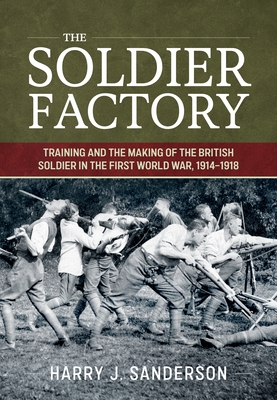
The Soldier Factory: Training and the Making of the British Soldier in the First World War, 1914-1918 (Wolverhampton Military Studies)
Current price:
$55.00
Publish Date:
Publisher:
Helion & Company
ISBN:
9781804519776
Pages:
224
Language:
English
Available for Preorder!
Description
The transformation of nearly five million civilians into infantry soldiers through training reshaped identity, experience, and battlefield effectiveness across the First World War.
This is the story of how the nearly five million British men enlisted into the British Army during the First World War were transformed from civilians into infantry soldiers, and how this process shaped each man's identity, his experience of the war, and his performance on the battlefield. Stephen Graham, recording his experiences in the First World War, summed up this transformation by describing training as 'the soldiery factory in which you go in at one end civilian and pass out eventually at the other side a soldier of the king'.
The Soldier Factory is the first work to examine how the training process worked within the British Army in-depth. It focuses on how training created infantrymen, as while aeroplanes, artillery, chemical weapons, machine guns, and tanks turning the battlefield into an industrialised killing zone, it was still the infantryman who led the advance into battle and conquered enemy positions. And the infantry bore the consequences: of 1,677,163 British casualties on the Western Front, 1,372,117 were infantrymen.
The Soldier Factory reveals that training was an inconsistent process, with nuances, evolutions, improvements, and regressions in its effectiveness which altered the type of infantryman it produced, the very nature of what a British infantryman was, and his effectiveness on the battlefield at different points in the war. The infantryman who arrived at the front in 1914 was almost unrecognisable from that of 1916, who was almost unrecognisable from that of 1918.
Other Books in Series
Preorder
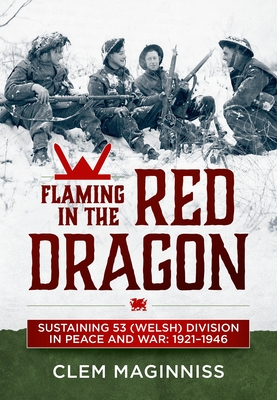
Flaming in the Red Dragon: Sustaining 53 (Welsh) Division in Peace and War: 1921-1946 (Wolverhampton Military Studies)
Paperback
Preorder

The Steps to Glory Volume 1: Commissioning Officers for Britain's Land Forces, 1660 to July 1914 (Wolverhampton Military Studies)
Hardcover
Preorder
Shaking the Pedestal: General Sir John Monash and the Battle of Hamel, 4 July 1918 (Wolverhampton Military Studies)
Hardcover
Preorder
From the Hindenburg to the Hermann: British Third and Fourth Armies' Operations; 27 September to 16 October 1918 (Wolverhampton Military Studies)
Hardcover
Piercing the Fog of War: The Theory and Practice of Command in the British and German Armies, 1918-1940 (Wolverhampton Military Studies)
Paperback
Preorder

Leaders: The British Infantry Nco in the Great War (Wolverhampton Military Studies)
Hardcover
Preorder

Under Most Trying and Difficult Circumstances: The Actions of the 59th (2nd North Midland) Division 1914 - 1918 (Wolverhampton Military Studies)
Hardcover
Preorder

London Pride: The London Territorial Force in Peace and War, 1908-1921 Volume 2: War, Learning, Adaptation and Legacy (Wolverhampton Military Studies)
Hardcover
An Army of Brigadiers: British Brigade Commanders at the Battle of Arras 1917 (Wolverhampton Military Studies)
Paperback
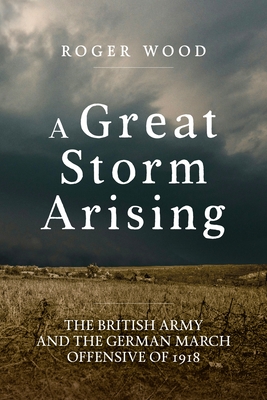
A Great Storm Arising: The British Army and the German March Offensive of 1918 (Wolverhampton Military Studies)
Hardcover
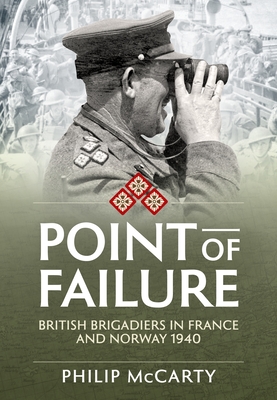
Point of Failure: British Brigadiers in France and Norway 1940 (Wolverhampton Military Studies)
Hardcover
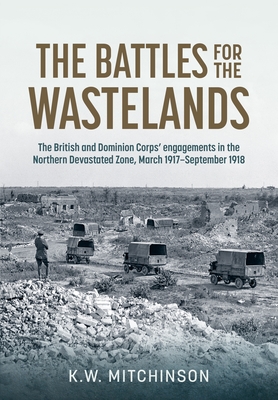
The Battle of the Wastelands: The British and Dominion Corps' Engagements in the Northern Devastated Zone: March 1917 - September 1918 (Wolverhampton Military Studies)
Hardcover
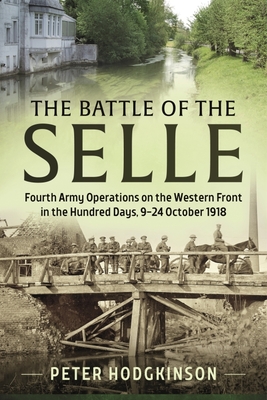
The Battle of the Selle: Fourth Army Operations on the Western Front in the Hundred Days 9-24 October 1918 (Wolverhampton Military Studies)
Paperback
The Doctrine of the British Army: The Conception & Implementation of Field Service Regulations in the British Army 1900-1918 (Wolverhampton Military Studies)
Hardcover

Flight Plan Africa: Portuguese Airpower in Counterinsurgency, 1961-1974 (Wolverhampton Military Studies #4)
Paperback
From Docks and Sand: Southport and Bootle's Battalion, the 7th King's Liverpool Regiment, in the First World War (Wolverhampton Military Studies)
Hardcover

The 48th (South Midland) Division 1908-1919 (Wolverhampton Military Studies)
Hardcover
Botha, Smuts and the Great War (Wolverhampton Military Studies)
Paperback
Spreading Ink Blots from Da Nang to the DMZ: The Origins and Implementation of US Marine Corps Counterinsurgency Strategy in Vietnam, March 1965 to No (Wolverhampton Military Studies)
Paperback